
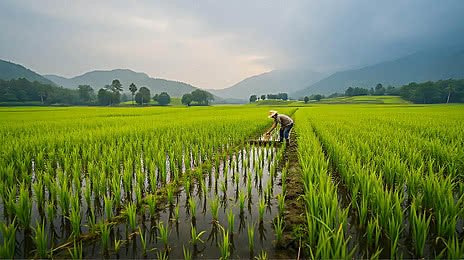
1. Farmer Empowerment
Farmer Empowerment is the core foundation of our Agriculture & Farmers Welfare Division. We believe that when farmers are organized and united, they become stronger, more confident, and capable of making better decisions for their future. Under this initiative, farmers are grouped into structured Farmer Societies at the village level, where each group consists of 20 or more members.
These societies promote collective decision-making, shared responsibilities, and mutual support among farmers. Instead of working individually, farmers collaborate to solve common challenges, share knowledge, and utilize resources efficiently. This approach not only strengthens their bargaining power in the market but also ensures that small and marginal farmers get equal opportunities to access modern agricultural facilities.
Through regular meetings, awareness programs, and continuous support, we help farmers become self-reliant, informed, and financially stable, creating a strong rural community network.
2. Modern Agriculture Support
In today’s rapidly evolving agricultural landscape, adopting modern techniques and tools is essential for better productivity and sustainability. Through this initiative, we provide farmers with access to advanced agricultural resources such as modern machinery, high-quality seeds, fertilizers, and crop protection solutions.
Rather than distributing resources individually, all facilities are provided to Farmer Societies, ensuring shared usage and maximum efficiency. This significantly reduces the cost burden on individual farmers while increasing output and profitability.
We also focus on educating farmers about modern farming practices, including sustainable agriculture, water conservation techniques, organic farming methods, and the use of technology in agriculture. Training sessions and demonstrations are regularly conducted to ensure that farmers are well-equipped to adopt these advancements.
This initiative bridges the gap between traditional farming and modern agriculture, helping farmers achieve higher yields and better quality produce.
3. Survey & Development Planning
Effective planning begins with a deep understanding of ground realities. Under this initiative, we conduct detailed surveys at the village level to identify the real needs, challenges, and opportunities for farmers.
These surveys include farmer profiling, crop analysis, land assessment, machinery requirements, education status, and employment conditions. The collected data helps us design customized solutions that are practical, relevant, and impactful.
Based on survey findings, targeted development plans are created and implemented through Farmer Societies. This ensures that resources are allocated efficiently and benefits reach the right farmers at the right time.
Regular monitoring and feedback mechanisms are also established to evaluate the effectiveness of implemented programs and make necessary improvements. This data-driven approach ensures transparency, accountability, and continuous development.
4. Rural Growth & Employment
Agriculture alone is not always sufficient to ensure financial stability for farmers. Therefore, this initiative focuses on creating additional income opportunities and promoting overall rural development.
We encourage and support farmers to explore allied sectors such as dairy farming, poultry, fisheries, and other small-scale rural enterprises. Training, guidance, and resource support are provided to help farmers start and manage these activities successfully.
In addition, skill development programs are conducted for farmers and their family members, especially youth, to enhance their employability and open new career opportunities. Education support and awareness programs are also included to ensure long-term social and economic growth.
By strengthening rural infrastructure, generating employment, and diversifying income sources, this initiative aims to build self-sustained villages where farmers can lead secure and prosperous lives.